Edge Computing: How It Is Changing the Future of Digital Technology
The way we use technology is changing faster than ever. Businesses, smartphones, smart homes, factories, hospitals, and even vehicles now generate huge amounts of digital data every second. Traditionally, much of this information was sent to centralized cloud servers for processing. While cloud computing remains extremely useful, sending every piece of data to a distant data center can create delays, increase network traffic, and raise concerns about privacy. This is where Edge Computing becomes important.
Edge Computing is a modern approach that brings data processing closer to the place where data is created. Instead of depending entirely on a remote cloud server, edge devices and local systems can analyze and process information nearby. This can make applications faster, more responsive, and more efficient.
What Is Edge Computing?
Edge Computing is a distributed computing model in which data processing and storage are moved closer to users, devices, and data sources. The “edge” refers to locations near the physical source of data, such as smartphones, security cameras, industrial machines, routers, vehicles, and Internet of Things devices.
For example, imagine a smart security camera monitoring a building. With a traditional cloud-based system, the camera may send continuous video footage to a remote server for analysis. An edge computing system can process much of that video locally. If the system detects unusual activity, it can immediately send an alert.
This approach reduces the amount of information that needs to travel across the internet and can significantly improve response times.
How Does Edge Computing Work?
The basic idea behind edge computing is relatively simple. Data is collected by connected devices and then processed as close to the source as practical.
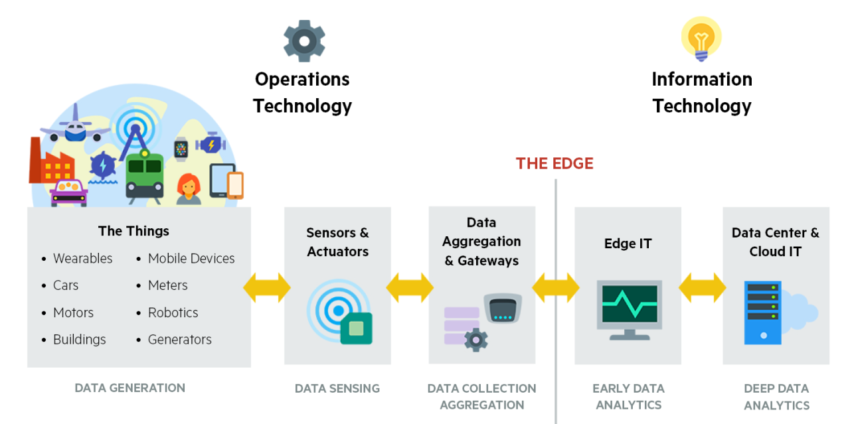
A typical edge computing environment may include sensors, IoT devices, gateways, local servers, and cloud platforms. Some information is processed locally, while more complex or less time-sensitive workloads can still be sent to a centralized cloud.
This creates a hybrid environment where edge computing and cloud computing work together rather than competing with each other.
For instance, a manufacturing facility may use sensors to monitor machines. An edge system can immediately identify unusual vibration or temperature changes and notify workers before equipment fails. At the same time, summarized information can be sent to the cloud for long-term analysis and reporting.
Benefits of Edge Computing
One of the biggest advantages of edge computing is lower latency. Because data does not always have to travel to a distant server and back, applications can respond much more quickly. This is particularly valuable for technologies that require near-instant decisions.
Edge computing can also reduce bandwidth usage. Instead of sending massive amounts of raw data to the cloud, local systems can filter and analyze information first. Only the most relevant data may need to be transmitted.
Another important benefit is improved reliability. Some edge applications can continue operating even when the connection to a central cloud service is slow or temporarily unavailable. This can be especially useful in industrial environments, remote locations, and critical infrastructure.
Privacy can also improve when sensitive information is processed locally. Although edge computing does not automatically make a system secure, keeping certain data closer to its source can reduce unnecessary transmission.
Edge Computing and the Internet of Things
The growth of the Internet of Things (IoT) is one of the major reasons edge computing has become increasingly important. IoT devices continuously collect information from their surroundings. Smart thermostats, wearable devices, connected vehicles, industrial sensors, and smart cameras can all produce significant quantities of data.
Sending all of this information to the cloud can put pressure on networks and increase processing costs. Edge computing provides a practical solution by allowing devices or nearby edge servers to handle some workloads locally.
Consider a smart city. Thousands of cameras, traffic sensors, parking systems, and environmental monitors may operate simultaneously. Edge computing can help these systems analyze information locally and respond to changing conditions without sending every data point to a distant data center.
Applications of Edge Computing
Edge computing has applications across many industries.
In healthcare, edge technology can support connected medical devices and help process patient information quickly. In manufacturing, it can monitor equipment and identify potential failures. In retail, edge systems can support smart stores, inventory management, and customer analytics.
The automotive industry is another major area of interest. Connected and autonomous vehicles need to make decisions quickly. Processing certain information locally can help reduce delays compared with relying entirely on remote servers.
Telecommunications companies are also using edge infrastructure to support modern applications and services. As networks become faster and connected devices become more common, processing data closer to users can help deliver responsive digital experiences.
Edge Computing vs. Cloud Computing
Edge computing does not mean that cloud computing is becoming obsolete. Instead, the two technologies often complement one another.
Cloud computing is excellent for large-scale storage, advanced analytics, centralized management, and applications that do not require immediate responses. Edge computing is particularly useful when speed, local processing, reduced bandwidth consumption, or continued operation is important.
A business may therefore use edge devices for real-time decisions while using cloud infrastructure for long-term data storage and large-scale analysis.
This combination can create a flexible technology environment that takes advantage of both approaches.
Challenges of Edge Computing
Despite its advantages, edge computing also introduces challenges. Managing many distributed devices can be more complicated than managing a smaller number of centralized servers. Organizations need effective monitoring, maintenance, software updates, and security practices.
Security is especially important because edge devices may be located in physically accessible or less controlled environments. Each connected device can potentially become a target for attackers if it is poorly configured or outdated.
Cost can also be a consideration. Deploying edge hardware, maintaining local infrastructure, and managing distributed systems may require significant investment. Organizations need to evaluate which workloads genuinely benefit from edge processing.
The Future of Edge Computing
The future of edge computing looks closely connected to artificial intelligence, 5G networks, robotics, and the continued growth of connected devices. AI models running closer to data sources can enable faster decisions in areas such as industrial automation, smart transportation, security, and healthcare.
As organizations generate more data, it may become increasingly impractical to send everything to centralized servers. Edge computing offers a way to distribute processing intelligently, allowing important decisions to happen closer to where data is produced.
Ultimately, the goal is not to replace the cloud but to create a more efficient computing ecosystem. Cloud platforms can handle centralized and large-scale workloads, while edge systems can provide fast local processing where it matters most.
FAQs About Edge Computing
1. What is Edge Computing?
Edge Computing is a technology that processes data closer to where it is generated instead of sending all information to a distant cloud server. This can reduce delays, improve performance, and make real-time applications more responsive.
2. How does Edge Computing work?
Edge Computing uses nearby devices, gateways, or local servers to collect and process data. Important information can be analyzed locally, while selected data can still be sent to the cloud for storage or more advanced processing.
3. What are the main benefits of Edge Computing?
The main benefits include lower latency, reduced bandwidth usage, faster responses, improved reliability, and the ability to process certain data locally. These advantages make edge technology useful for applications that require quick decisions.
4. Is Edge Computing the same as Cloud Computing?
No. Edge Computing processes data closer to its source, while Cloud Computing generally relies on centralized remote data centers. However, both technologies can work together to provide efficient data processing, storage, and analysis.
5. Where is Edge Computing used?
Edge Computing is used in many industries, including manufacturing, healthcare, transportation, retail, telecommunications, and smart cities. It can support applications such as industrial monitoring, connected vehicles, smart cameras, and IoT devices.
6. Why is Edge Computing important for IoT?
IoT devices can generate enormous amounts of data. Processing some of that information near the devices reduces the need to send everything to the cloud, helping improve response times and reduce network traffic.
7. Is Edge Computing secure?
Edge Computing can support better data privacy by allowing certain information to be processed locally, but it is not automatically secure. Organizations still need strong authentication, encryption, software updates, monitoring, and other security measures to protect edge devices.
8. What is the future of Edge Computing?
The future of Edge Computing is expected to be closely connected with artificial intelligence, 5G, robotics, autonomous vehicles, and IoT. As more devices generate data, processing information closer to its source can become increasingly valuable for fast and efficient digital services.
Conclusion
Edge Computing is becoming an important part of modern digital infrastructure. By moving computing resources closer to data sources, it can reduce latency, lower network traffic, support real-time applications, and improve the efficiency of connected technologies.
From smart factories and healthcare devices to connected vehicles and smart cities, edge computing is already influencing how digital systems operate. As IoT adoption, artificial intelligence, and high-speed networks continue to expand, the importance of processing data closer to its source is likely to grow.
For businesses and technology developers, understanding edge computing is therefore more than following a technology trend. It is about preparing for a future in which computing happens everywhere—from centralized cloud platforms to the devices and systems operating at the very edge of the network.