Hybrid Cloud: The Flexible Future of Modern IT Infrastructure
In today’s fast-moving digital world, businesses need technology that is flexible, secure, reliable, and capable of growing with their needs. This is one reason Hybrid Cloud has become an important solution for organizations of all sizes. Instead of relying entirely on a public cloud or keeping everything inside a private data center, a hybrid cloud combines both environments and allows them to work together.
A hybrid cloud gives businesses more control over their data and applications while still providing the scalability and convenience associated with cloud computing. For companies dealing with changing workloads, sensitive information, remote teams, and growing digital services, this approach can offer a practical balance between performance, security, and cost.
What Is Hybrid Cloud?
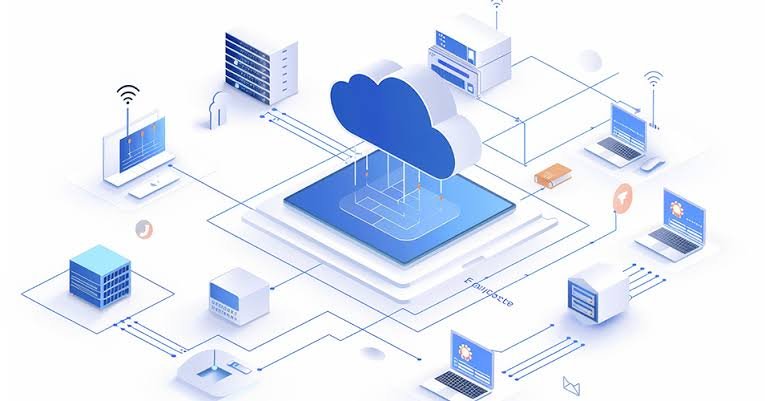
Hybrid Cloud is a computing environment that combines a private cloud or on-premises infrastructure with one or more public cloud services. These environments are connected so that applications, workloads, and data can move between them when necessary.
For example, a company might store highly sensitive customer information in its private infrastructure while using a public cloud platform to run a website or support applications that experience unpredictable traffic. This allows the business to use different environments according to the specific requirements of each workload.
The main idea is simple: businesses do not have to choose between public and private cloud computing. They can use both and select the environment that makes the most sense for a particular task.
How Does Hybrid Cloud Work?
A hybrid cloud depends on technologies that allow different computing environments to communicate and share resources. Organizations typically use cloud management platforms, application programming interfaces, networking technologies, virtualization, and security tools to connect their private and public infrastructure.
When additional computing power is required, workloads can be moved or extended into a public cloud. This can be especially useful during periods of high demand. Once demand decreases, businesses can reduce their public cloud usage and return to normal operations.
This flexibility is sometimes called cloud bursting. It can help organizations handle temporary increases in traffic without purchasing large amounts of permanent hardware.
Benefits of Hybrid Cloud
One of the biggest advantages of a hybrid cloud strategy is flexibility. Businesses can decide where applications and data should operate based on security, performance, cost, and business requirements.
1. Better Data Control
Some organizations must protect sensitive customer, financial, healthcare, or business information. Keeping certain workloads in a private environment can provide greater control over where data is stored and how it is accessed.
At the same time, less-sensitive workloads can take advantage of public cloud services.
2. Improved Scalability
Business demand can change quickly. A website might receive normal traffic most of the year but experience a huge increase during a sale or special event.
Hybrid Cloud makes it possible to use public cloud resources when extra capacity is needed. This can help businesses scale without constantly investing in additional physical servers.
3. Cost Management
Maintaining a large private data center can require significant spending on hardware, maintenance, electricity, cooling, and IT personnel. Public cloud services can reduce the need for some of this infrastructure.
With a hybrid approach, businesses can keep essential systems on private infrastructure while using public cloud resources for workloads where cloud-based pricing and scalability are beneficial.
4. Greater Business Continuity
A well-designed hybrid environment can also support disaster recovery and business continuity. Critical applications or backups can be maintained in a separate environment so that the organization has alternatives if its primary infrastructure becomes unavailable.
However, simply having both private and public infrastructure does not automatically guarantee disaster recovery. Businesses still need proper backup, security, testing, and recovery plans.
Hybrid Cloud Security
Security is one of the most important considerations when adopting a hybrid cloud strategy. Connecting multiple environments can increase flexibility, but it can also create additional points that need protection.
Organizations should use strong identity and access management, encryption, network security, monitoring, regular updates, and appropriate access controls. Employees should only receive the permissions necessary for their responsibilities.
It is also important to monitor data as it moves between private and public environments. Security policies should be consistent across the entire infrastructure rather than treating each environment as completely separate.
Hybrid Cloud vs. Public and Private Cloud
A public cloud uses cloud infrastructure provided by an external provider and shared among multiple customers. It is often attractive because of its scalability and flexible pricing.
A private cloud is dedicated to a single organization and can provide greater control over infrastructure and data.
A hybrid cloud combines elements of both. It is designed for organizations that want the flexibility of public cloud services while retaining private infrastructure for workloads that require additional control.
There is no universal solution that is best for every business. The right choice depends on the organization’s budget, security requirements, applications, compliance needs, and long-term technology strategy.
Challenges of Hybrid Cloud
Although Hybrid Cloud provides many advantages, it can also introduce challenges. Managing multiple environments may require specialized skills and more sophisticated monitoring tools.
Compatibility can also become an issue. Applications designed for one environment may not always work efficiently in another. Network connectivity, data transfer costs, security policies, and performance must also be carefully considered.
Another challenge is complexity. Without proper planning, an organization may end up with disconnected systems, unclear responsibilities, and unnecessary cloud spending.
For this reason, businesses should create a clear cloud strategy before moving workloads between environments.
Who Should Use Hybrid Cloud?
Hybrid Cloud can be particularly useful for businesses that have a combination of traditional and cloud-based applications. It may also benefit organizations with sensitive data, variable workloads, regulatory requirements, or existing investments in on-premises infrastructure.
Large enterprises often use hybrid environments because completely replacing existing infrastructure can be expensive and disruptive. Smaller businesses can also benefit when they need cloud scalability but want to keep certain systems under their direct control.
The Future of Hybrid Cloud
As businesses continue adopting artificial intelligence, data analytics, automation, and modern applications, the demand for flexible infrastructure is likely to remain strong. Hybrid Cloud can provide an adaptable foundation that allows organizations to combine different technologies instead of depending on a single environment.
The future of cloud computing is not necessarily about choosing one platform. It is increasingly about creating an infrastructure strategy that places each workload in the environment where it can operate most effectively.
Conclusion
Hybrid Cloud offers businesses a practical way to combine the control of private infrastructure with the scalability of public cloud services. It can support better resource management, flexible workloads, data control, and business continuity when properly designed.
However, successful implementation requires more than simply connecting two environments. Organizations need strong security, effective monitoring, skilled management, and a clear understanding of their applications and business requirements.
For companies looking for a flexible approach to modern IT infrastructure, Hybrid Cloud can be a powerful option. By using private and public resources strategically, businesses can build technology environments that are more adaptable to changing demands and future growth.